


Pizza Delivery for Large Groups Made Easy
- GIUSEPPE BUFFA
- Jul 31
- 6 min read
A hungry crowd can turn a simple pizza order into a guessing game fast. The right pizza delivery for large groups keeps the table full, the host relaxed, and the conversation focused on the party instead of whether there is one last slice left. Whether you are feeding an office team, a birthday crowd, a school group, or family visiting for the weekend, a little planning makes all the difference.
Pizza works because it is familiar, shareable, and easy to serve. But a great group order is not just about ordering more boxes. It is about choosing the right mix of pizza, sides, and Italian favorites so guests with different appetites have something worth reaching for.
Start With a Real Headcount
The number of guests is the starting point, but it should not be the only number you use. Think about who is coming and when you are serving. A late-afternoon team meeting may call for lighter portions than a Saturday night graduation party. A group of teenagers, athletes, or hungry coworkers can put away significantly more than a group gathering after a full catered meal.
For pizza as the main meal, plan for about two to three standard slices per adult. If pizza is part of a bigger spread with pasta trays, salads, wings, or appetizers, two slices per person is often enough. For a group with big appetites, give yourself room to go higher.
A simple planning rule helps:
For 10 people, plan roughly 20 to 30 slices.
For 20 people, plan roughly 40 to 60 slices.
For 30 people, plan roughly 60 to 90 slices.
For 50 people, plan roughly 100 to 150 slices.
That range may look wide, because it is. The right amount depends on the event. A lunch-and-learn with cookies afterward is different from a game-day watch party where dinner is the main event. When in doubt, it is better to have a few slices left than to make guests watch the last box disappear before they eat.
Choose Pizza Sizes That Make Serving Easier
For larger orders, slice count matters as much as pie count. Big, shareable pizzas make it easier to feed a room without stacking the table with small boxes or making guests wait for the next round.
DiMaria's Her Majesty GranMa Pie is built for that kind of moment. This New Jersey-style specialty comes cut into 16 slices, giving party hosts a smart way to put more grab-and-go portions on the table. A 16-slice format is especially useful for offices, team gatherings, and family events where people tend to take one slice first, then circle back for another.
Mixing formats can also work in your favor. Use large shareable pies as the foundation, then add a few specialty pizzas for guests who want something beyond the classic. A plain cheese pie is never a boring choice when you are feeding a crowd. It is the reliable starting point that works for kids, selective eaters, and guests who prefer to keep it simple.
Build a Crowd-Pleasing Pizza Mix
The safest large-group order has variety without becoming complicated. Ordering a different topping on every pie may sound generous, but it can create waste and leave guests searching through boxes. Instead, build around familiar favorites, then add a few bold choices.
For most groups, start with cheese and pepperoni. These are the first boxes to open and often the first to empty. Add a vegetable-forward option and a meatier option if your crowd is mixed. If you know the group well, tailor the order to the occasion. An office that always talks about spicy food may appreciate a pie with a little kick. A family party may need extra plain cheese for the younger guests.
The sweet spot is usually a balanced mix: about half familiar favorites, a quarter classic specialty choices, and a quarter based on the specific tastes of your group. This approach gives people options without turning dinner into a survey.
Do Not Forget Dietary Needs
Before placing a big order, send a quick message to the group or ask the person coordinating the event. You do not need everyone to submit a full meal preference, but knowing about vegetarian needs, allergies, or guests who do not eat pork can prevent a lot of last-minute stress.
Keep those options clearly separated when serving. Place the vegetarian pizza at one end of the table, and let guests know which boxes contain which toppings. If an allergy is involved, communicate it clearly when ordering. Restaurants can help guide the order, but guests with severe allergies should always use their own judgment about what is safe for them.
Add More Than Pizza When the Event Calls for It
Pizza can absolutely carry a party on its own. Still, bigger events often feel more complete with a few supporting dishes. The key is choosing sides that serve easily and do not compete with the main event.
A salad gives the table something fresh and offers a lighter choice for guests who do not want three slices. Wings, garlic knots, or other appetizers work well for a casual party where people will snack over several hours. Pasta trays and Italian entrées make more sense for business lunches, family celebrations, and events where you want a fuller meal without asking guests to build a plate from pizza alone.
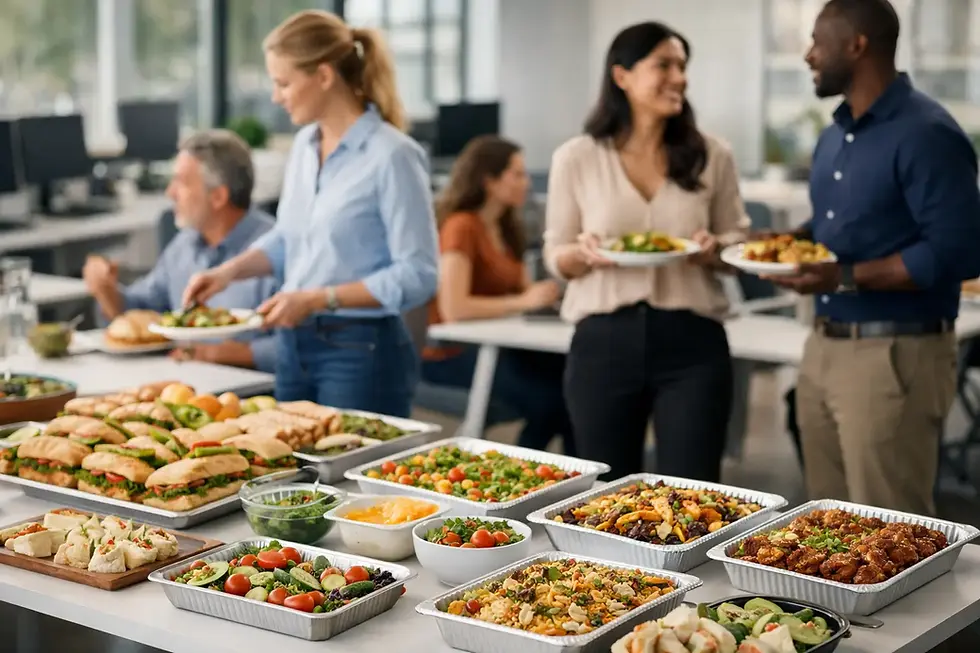
This is where catering can be the better fit. If you are feeding a large group, delivered trays create a more complete spread and take pressure off the host. Pizza delivery is perfect for an easy, high-energy gathering. Catering is often the stronger choice when the meal needs to feel more structured or when you are serving a group with a wide range of appetites.
Time Your Order Like a Host Who Has Done This Before
The best food in the world cannot save a schedule that is too tight. For pizza delivery for large groups, timing is part of the order. Place it early, especially for evening events, weekends, holidays, and big local game days. A restaurant can prepare a large order more accurately when it has time to plan for it.
Aim for delivery 15 to 20 minutes before guests are expected to eat. That window gives you time to set out plates, napkins, drinks, and serving space without letting the food sit too long. If guests are arriving in waves, consider staggering the food. Start with appetizers and a first round of pizza, then bring out more boxes as the group settles in.
For office lunches, schedule delivery before the meeting ends, not at the exact minute everyone is released. For home parties, make sure someone is ready to receive the order. A hot pizza box on a doorstep is not a party plan.
Set Up the Table for Fast Serving
Once the food arrives, open boxes strategically. Put cheese and pepperoni in the most visible spot, then place specialty pies nearby. Keep plates, napkins, cups, and drinks at the beginning of the line so guests do not have to reach over hot boxes.
If you are serving 25 people or more, label pizzas with a small note or simply announce what is in each box. It sounds small, but it prevents the classic party moment when someone lifts every lid looking for the one slice they want.
Keep a few boxes closed until the first round starts to thin out. Closed boxes hold heat better, and bringing out a fresh hot pie halfway through the meal always gets a good reaction.
Make Ordering Easy for the Person in Charge
The host should not have to manage five separate payment requests, collect topping preferences all morning, and chase down addresses. Decide on the budget, select a practical mix, and place one clear order. If your event has a fixed budget, spend it first on enough pizza for everyone, then add sides with what remains.
Direct ordering can make the process faster for repeat group meals, especially when you already know the crowd's favorites. Ordering online, through an app, by phone, or in person gives hosts flexibility based on what is easiest for the day. For larger catered events, ask early so the order can be planned around your guest count, menu needs, and delivery timing.
For gatherings around Mount Joy, Salunga, Landisville, Marietta, Manheim, or Elizabethtown, planning ahead helps turn delivery from a last-minute fix into part of a great event.
A big pizza order should feel generous, not stressful. Count your guests, choose enough slices, mix the classics with a few favorites, and give the kitchen a little lead time. Then open the boxes, let the crowd dig in, and enjoy the fact that you planned the part everyone remembers.


Comments