


The Future of Pizza Delivery Is Getting Smarter
- GIUSEPPE BUFFA
- Apr 4
- 6 min read
Friday at 6:12 p.m. is when pizza delivery gets judged for real. Kids are hungry, someone forgot to plan dinner, and nobody wants a cold pie, a missing side, or an app that makes ordering feel like work. That is exactly why the future of pizza delivery matters - not as some flashy tech trend, but as a better answer to the weeknight rush.
For local pizza shops, the goal is not to turn dinner into a science experiment. It is to make ordering easier, delivery faster, and the food more consistent from kitchen to front door. The best version of what comes next is simple: fewer headaches, hotter pizzas, more accurate orders, and a smoother experience for families, couples, offices, and anyone trying to feed a group without wasting time.
What the future of pizza delivery really looks like
A lot of people hear "future" and think drones, robots, and gimmicks. Some of that may show up in certain markets, but for most neighborhoods, the real changes will be more practical. Better ordering systems, smarter dispatching, stronger communication, and packaging that protects quality will do more for customers than flashy experiments ever could.
That shift is good news. Most customers do not care whether a pizza traveled in a robot if it shows up late and lukewarm. They care that the crust still has texture, the cheese still looks right, and the order is exactly what they asked for. The future of pizza delivery will belong to restaurants that get those details right every single night.
Ordering will feel easier, not more complicated
The biggest upgrade is already happening on the front end. Customers want options. Some people still call. Some walk in. A growing number want to order through a website or mobile app, save their favorites, apply rewards, and reorder in seconds.
That convenience is not a bonus anymore. It is part of the product. If a customer can customize a pie, add a salad, throw in garlic knots, and check out quickly, that order is more likely to happen. If they can track it and know when it is leaving the store, even better.
Apps and direct ordering will matter more
Third-party apps changed customer expectations, but they also created trade-offs. They can expand reach, but they often add fees, reduce control, and put distance between the restaurant and the customer. That is why many local shops are investing more in direct online ordering and branded apps.
When customers order direct, restaurants can move faster, catch mistakes sooner, and reward loyalty in a way marketplace apps rarely support well. Specials, reward points, and easy repeat ordering are not just marketing extras. They help turn one delivery into a regular habit.
Speed will come from better systems, not just faster drivers
People talk about delivery time like it starts when the driver leaves. It starts much earlier than that. A slow handoff from ordering to the kitchen, poor route planning, or unclear timing can wreck delivery before the pizza is even boxed.
The smarter future is about coordination. Restaurants are getting better at predicting rush windows, batching orders without hurting quality, and assigning deliveries based on real route logic instead of guesswork. That means fewer delays and fewer orders sitting around waiting.
Smarter dispatch changes everything
A good dispatch system can shave minutes off a run without asking drivers to do the impossible. It can group nearby stops, avoid overloaded routes, and keep the kitchen from firing an order too early. Those little improvements add up.
For customers, the result is simple. Food arrives hotter. ETAs are more believable. Delivery feels dependable instead of random. That trust matters more than any futuristic gadget.
Food quality will drive the next wave
Nobody orders pizza because they are excited about software. They order because they want great pizza. So while digital tools are improving, the restaurants that win will be the ones that protect food quality all the way to the doorstep.
That means packaging will keep improving. Boxes need to hold heat without trapping so much steam that the crust gets soft. Containers for pasta, wings, salads, and appetizers need to travel well as part of one order. Group meals and catering deliveries need even more attention because a late or sloppy drop-off affects a whole room, not just one table.
Menu design will shape delivery success
Not every dish travels the same way. Some pizzas hold beautifully. Some toppings need more care. Some sides stay crisp, and some are better for dine-in. Smart restaurants will keep adjusting menus and packaging based on how food actually performs in transit.
That does not mean shrinking the menu into something boring. It means being honest about what delivers well and building a delivery menu that protects the experience. Signature items still matter, but they have to arrive like they left the kitchen.
The future is local, even when the tech gets better
Here is the part that gets missed: the future of pizza delivery is not less personal. It is more personal. As ordering tools improve, local restaurants can do a better job remembering customer habits, rewarding repeat visits, and serving neighborhoods with more consistency.
A local pizza shop knows its Friday rush, its school-night patterns, and which orders tend to spike during storms, game days, and family events. That neighborhood knowledge cannot be copied easily by a giant app. It helps with staffing, prep, route planning, and customer service.
For a community-focused restaurant, delivery is not just a transaction. It is a promise that dinner is handled. That matters even more when families are busy and offices need lunch to show up on time.
Catering and group delivery will keep growing
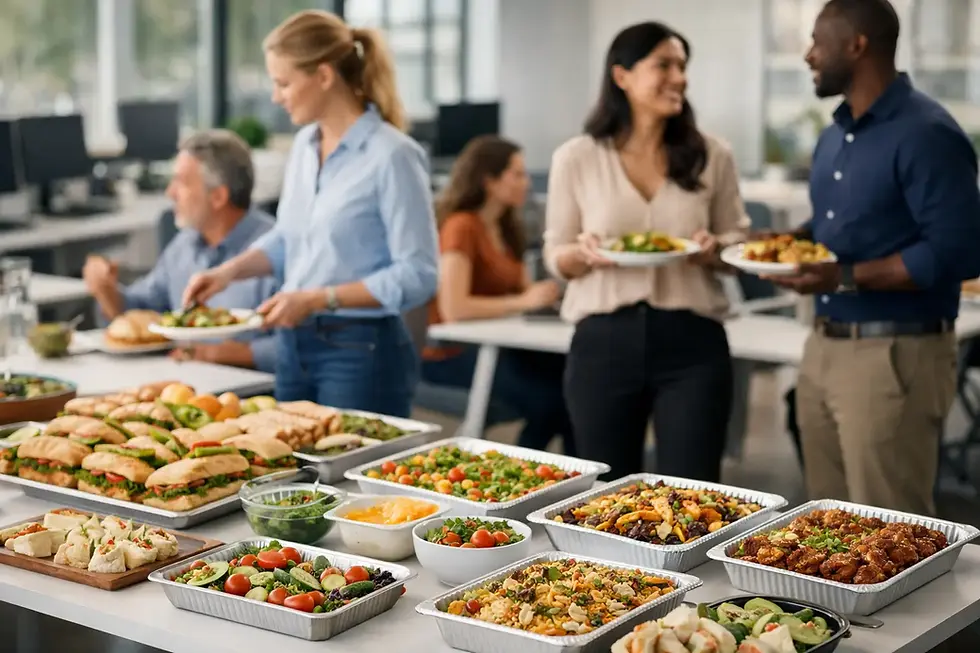
One of the biggest opportunities ahead is not just individual dinner orders. It is group delivery. Offices, schools, parties, team events, and family gatherings all want food that is easy to share, easy to serve, and reliable when timing matters.
This is where pizza has a real edge. It is familiar, flexible, and built for groups. But the standard for delivery is rising. Customers expect accurate counts, better scheduling, clearer communication, and food that still feels fresh when it reaches a meeting, birthday, or event space.
Restaurants that handle both everyday delivery and larger-format catering well will stand out. Trays, specialty pies, sides, and add-ons give customers more ways to build a complete order without overthinking it. That mix of comfort and convenience is hard to beat.
Automation is coming, but people still matter
Yes, automation will play a role. More restaurants will use AI-assisted order management, demand forecasting, and customer messaging. Some markets may test robots or autonomous vehicles. But pizza delivery is still a people business.
Drivers handle real-world variables that software cannot fully control. Traffic changes. Addresses are confusing. Apartment drop-offs take extra time. Customers ask questions, add requests, and sometimes need a quick fix when something goes wrong. Human judgment still counts.
The sweet spot is using technology to support people, not replace them. Let software improve timing and communication. Let trained staff focus on quality, hospitality, and solving problems quickly. That balance is where real progress happens.
What customers should expect next
Customers should expect a better delivery experience, but also a more intentional one. Restaurants will keep pushing for direct ordering, clearer loyalty perks, and stronger communication from checkout to doorstep. They will also keep narrowing the gap between dine-in quality and delivery quality.
That could mean more accurate prep times, better packaging, live order updates, easier catering scheduling, and personalized offers based on what customers actually order. It may also mean restaurants drawing firmer boundaries around delivery zones or timing during peak hours. That is a trade-off, but sometimes a necessary one to protect food quality and service.
At DiMaria's in Mt. Joy, that local-first model already makes sense - direct online ordering, app convenience, rewards, catering, and food made with real pride all point in the right direction. The future does not have to feel far away when the basics are already getting stronger.
Why the future of pizza delivery favors restaurants that stay focused
The restaurants that win the next few years will not be the ones chasing every shiny idea. They will be the ones that make dinner easy to order, easy to trust, and worth repeating. Fast matters. Tech matters. But great pizza, clear communication, and local reliability still matter most.
That is the real shift ahead. The future of pizza delivery is not about making things fancier. It is about making a Friday night, office lunch, or family gathering run smoother without losing the heart of what people came for in the first place.
If delivery keeps getting smarter while the food stays honest, hot, and made with love, customers will notice - and they will keep coming back.


Comments