

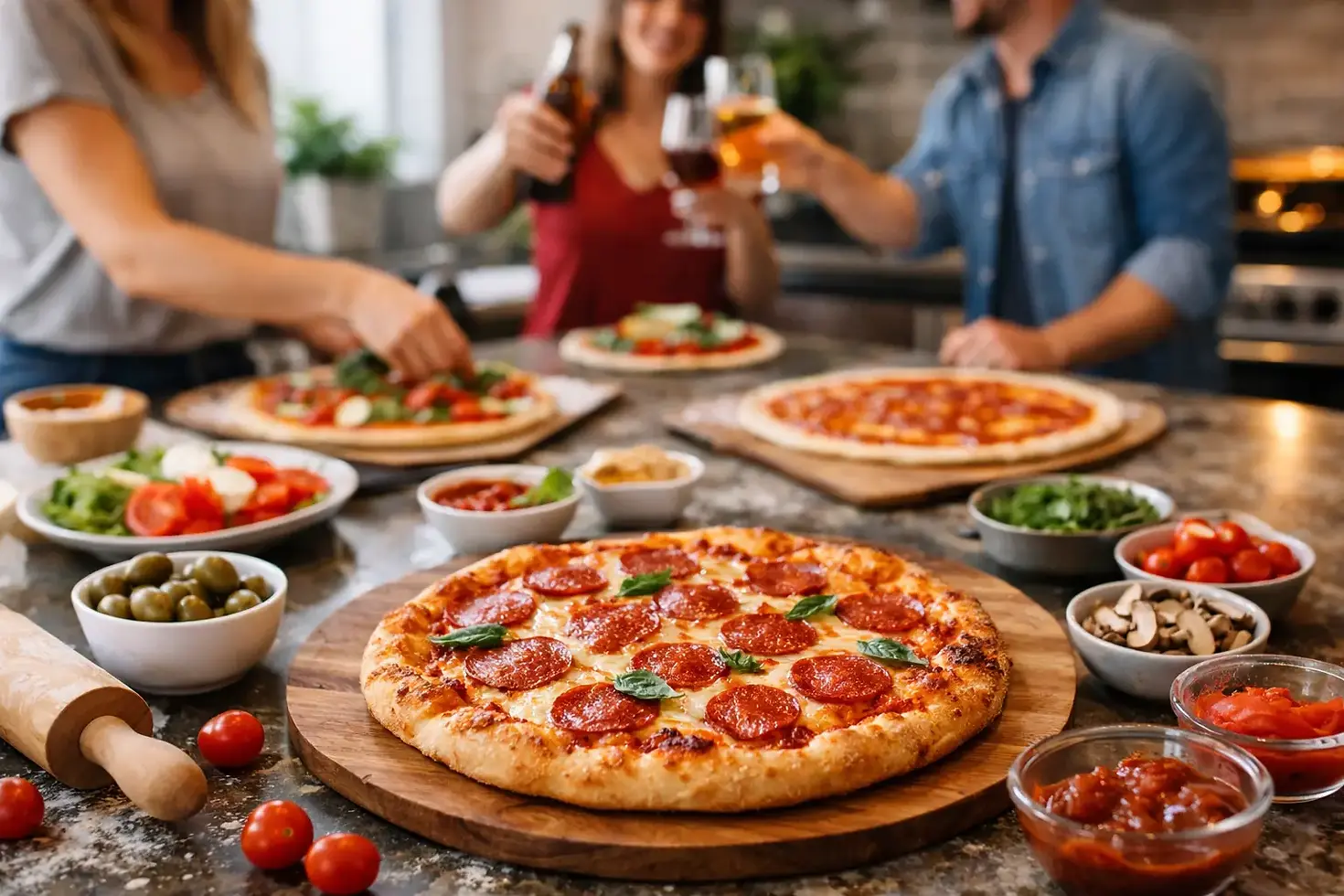
Guide to Hosting a Pizza Party at Home
A great pizza party usually comes down to one thing - the moment the first box opens and everybody leans in. No overthinking, no fussy menu, no host stuck in the kitchen while the fun happens somewhere else. If you want a real guide to hosting a pizza party at home, start there: make it easy to serve, easy to eat, and easy to enjoy.
Pizza works because it feels like a win for everyone. Kids are happy, adults are happy, and you do not need a full dining room setup to pull it off. It can be casual for a Friday night, built out for a birthday, or turned into a game-day spread with a little extra planning. The trick is knowing where to keep it simple and where a few smart choices make the whole night feel more put together.
Start your pizza party with the guest list
Before you think about toppings, think about people. A pizza party for six close friends is very different from feeding fifteen relatives, a room full of kids, or a mixed group with picky eaters and a couple of serious food lovers. That changes how much variety you need, how much food to order, and whether you want everyone eating at once or grazing over a couple of hours.
For a smaller group, you can have more fun with specialty pies because people are usually willing to try a slice of something different. For a larger group, familiar flavors carry the night. Cheese, pepperoni, and one or two crowd-pleasing combos do more work than an ambitious topping list ever will. If you go too niche, you end up with a half-eaten white pie and not enough plain slices for the people who would have gladly eaten three more.
Timing matters too. A lunch party tends to be lighter, while a dinner crowd will eat more than you think, especially if drinks are flowing and the pizza is good. Teenagers and game-day guests can put away serious numbers. It is better to plan for leftovers than to watch the last slice disappear too early.
How much pizza should you order?
This is where hosts either nail it or get nervous. The easiest rule is two to three slices per adult for a mixed menu with sides, and three to four slices if pizza is the main event and your crowd is hungry. For kids, one to two slices is often enough, depending on age.
That said, size and style matter. A thinner New York-style slice eats differently than a heavier pan pizza loaded with toppings. A big pie cut into generous slices can satisfy people faster than smaller, thicker pieces. If you are serving salad, wings, garlic knots, or dessert, people usually pace themselves. If the pizza is the star and there is a big game on, order heavier.
A smart middle ground is to order enough for everyone to have two slices right away, then enough extra for about half the group to have one or two more. That keeps the mood relaxed. Nobody likes the feeling of rationing pizza at a pizza party.
Build a menu people actually want to eat
The best pizza party menu is balanced, not flashy. Start with a base of classics, then add one or two pies with a little personality. That gives adventurous eaters something fun without making your cautious eaters work too hard.
A simple formula works well: one cheese pie, one pepperoni pie, one meat or supreme-style option, and one veggie-forward or white pie for every 8 to 10 guests. If you are feeding more people, scale that pattern up. If someone in the group does not eat meat, do not make their only option a slice with every vegetable in the place. A clean, well-made veggie pie or plain cheese pizza usually gets eaten faster than an overloaded "healthy" option.
Sides should support the pizza, not compete with it. A crisp salad adds balance and makes the whole spread feel more complete. Wings bring energy if your crowd expects game-day food. Garlic knots or bread can be great, but they also fill people up quickly, so they make more sense for bigger appetites or a party that lasts a while.
If you want to go one level up without making extra work, add a few dipping sauces, crushed red pepper, grated cheese, and paper plates sturdy enough to handle a hot slice. Those little details make home service feel less improvised.
Set up the room for movement, not perfection
A pizza party is not a sit-down holiday meal. People move around, go back for seconds, and gather wherever the food is. Set your space up for that kind of traffic.
Keep the food in one central area if you can. A kitchen island, dining table, or long counter works well because people can see all the options at once and make quick choices. If you scatter food across the house, guests miss things and you end up answering the same question over and over. Put napkins, plates, drinks, and extras in easy reach so people can help themselves without asking.
You also want a place for used plates and empty bottles that is obvious from the start. That sounds small, but it saves your counters. A trash can in view or a clean-up station off to the side keeps the mess from creeping into the whole room.
If you are hosting kids, lower tables and simple access matter more than presentation. If you are hosting adults, casual seating beats formal seating. Couches, stools, and standing room all work because pizza is one of the few meals that feels just right in your hand.
A practical guide to hosting a pizza party at home without stress
The host should not be tied to the oven all night. That is the whole point. If you are making pizza yourself, the party becomes partly about cooking, which can be fun, but it also changes the energy. Guests may enjoy watching dough get stretched and toppings go on, yet service gets slower and someone usually ends up managing heat, timing, and cleanup instead of actually hanging out.
If your goal is a relaxed party, ordering in is often the better move. You get consistency, faster serving, and more time with your guests. For bigger gatherings, that trade-off matters even more. The night feels smoother when all the food arrives ready to go instead of in waves from your kitchen.
This is where local spots that know how to feed a crowd can really carry the night. In Mount Joy and the surrounding area, a place like DiMaria's makes sense when you want New York-style pizza that lands well with both everyday eaters and the friend who always has opinions about crust. If you are feeding a larger group, event-friendly ordering matters just as much as flavor.
Drinks and dessert should stay easy
You do not need a complicated drink menu with pizza. In fact, simpler is usually better. Water, soda, iced tea, sparkling drinks, and a cooler with a few adult options cover most groups just fine. The goal is choice, not theater.
Dessert should follow the same rule. After pizza, people usually want something sweet and low effort. Cookies, brownies, or a small tray of cannoli-style treats work better than a full plated dessert. If it is a birthday party, cake obviously has its place, but even then, keep the serving simple so the night does not stall out after the candles.
Do not ignore pacing
One of the easiest mistakes in any guide to hosting a pizza party at home is assuming the food alone sets the pace. It does not. You do. If guests arrive and there is nothing to nibble on while the pizza is still twenty minutes away, the room can feel flat. If all the food hits the table before everyone gets there, early arrivals fill up and late arrivals get the leftovers.
A small snack at the start helps. Chips, a bowl of salad, or something light buys you time and keeps people comfortable. Then when the pizza shows up, make a quick announcement, open the boxes, and let the room come alive. That little bit of direction helps more than hosts realize.
For longer parties, stagger the extras. Put out salad first, pizza next, dessert later. The night feels more generous without actually becoming more complicated.
Leave room for preferences and surprises
Every group has its own personality. Some want plain slices only. Some want half the menu. Some will ask for ranch, hot honey, or extra cheese on the side. The best host does not take that personally. Build in a little flexibility.
If you know someone is gluten-sensitive, vegetarian, or feeding younger kids, handle that before the party starts. It is much easier to order one pie with a clear purpose than to improvise when everyone is hungry. You do not need a menu for every possible preference, but you do want your guests to feel thought of.
And yes, leftovers are part of the win. Extra slices mean no one is counting pieces, and they make the next day better too. A good pizza party should feel abundant, not exact.
The best nights are rarely the fussiest ones. Get enough pizza, make the room easy to navigate, and choose food people are excited to eat. When the slices are hot and the host is actually enjoying the party, the whole thing works exactly the way it should.


Comments