


10 Corporate Lunch Catering Examples That Work
A good office lunch can save a rough meeting, smooth out a long training day, and make people actually show up on time. That is why corporate lunch catering examples matter more than they seem at first glance. The right setup keeps the room fed, the schedule moving, and the person placing the order from getting five last-minute texts asking, “Is there anything vegetarian?”
If you are ordering for a team, clients, or a full office, the goal is not to get fancy for the sake of it. The goal is to serve food people want to eat, in portions that make sense, with enough variety to keep the whole group happy. Some lunches work best as grab-and-go. Others need hot trays, easy sharing, and comfort-food energy that can carry a room through an afternoon.
Corporate lunch catering examples for real offices
The best corporate lunches are built around three things: easy serving, broad appeal, and reliable timing. Here are ten formats that work well in real business settings, not just on paper.
1. Pizza and salad for fast, low-friction lunches
This one stays popular because it works. Pizza is easy to portion, quick to serve, and familiar enough that most groups are immediately on board. Add a couple of salads and you turn a simple order into a lunch that feels complete.
This format is especially strong for casual team lunches, working sessions, onboarding days, and departments that need to eat on a tight timeline. The trade-off is that pizza-only orders can feel a little light for longer events, so adding salads, pasta, or a side tray usually makes the meal feel more intentional.
2. Pasta trays for meetings that need staying power
Pasta is one of the safest hot catering choices for office groups. It holds heat well, serves cleanly from trays, and feels more substantial than sandwiches when you are feeding people through a long meeting or presentation.
A smart pasta order usually includes two styles, such as a red-sauce option and a cream-sauce or baked option, plus bread and salad. That gives people enough variety without making the order too complicated. If your group includes a mix of hearty eaters and lighter lunch preferences, pasta trays hit the middle nicely.
3. Sandwich platters for trainings and midday events
Sandwich catering works when people are coming and going, eating in shifts, or grabbing lunch between sessions. It is easy to set out, does not require much table space, and supports shorter lunch windows.
The catch is that sandwich platters can feel a little cold and generic if the menu is not well chosen. They are best when you need convenience first. If the event is client-facing or meant to feel more generous, hot Italian food usually lands better.
4. Italian combo spreads for larger teams
One of the strongest corporate lunch catering examples is the combo spread - pizza, pasta, salad, bread, and maybe a few appetizers or sides. This works because it gives the room options without turning lunch into a buffet with too many moving parts.
For offices, combo spreads are a smart answer to mixed preferences. Some people want a slice and salad. Others want a hot pasta plate. Nobody feels boxed into one choice. If you are ordering for a larger team and want to play it safe while still serving something people will remember, this format earns its spot.
5. Boxed lunches for client meetings and individual portions
Sometimes shared trays are not the best move. If the setting is formal, the room is tight, or you need cleaner individual service, boxed lunches make sense. They help with portion control, simplify distribution, and reduce the awkwardness of passing food around a conference table.
They are also useful when departments are spread out or attendees are taking lunch back to their desks. The downside is that boxed lunches can feel less warm and communal than family-style catering. They solve a logistics problem well, but they are not always the most inviting option.
6. Buffet-style hot lunch for all-hands meetings
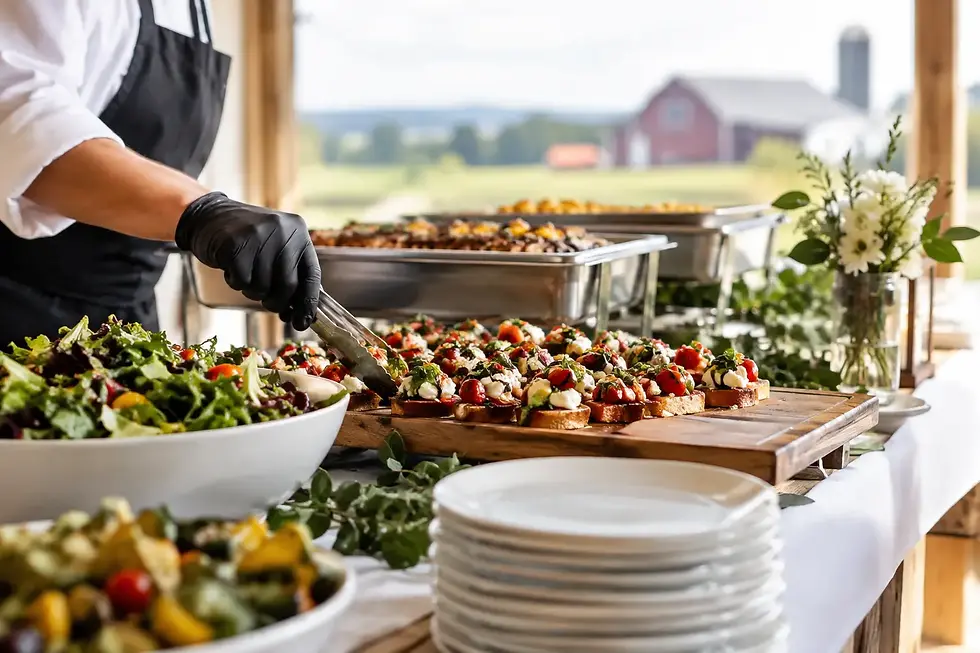
When the full office is gathering, buffet-style catering usually gives you the best flow. People can serve themselves, portions are flexible, and the menu can cover multiple preferences without needing custom meals for every person.
This setup works well for quarterly meetings, appreciation lunches, retirement parties, and milestone celebrations. It also feels more generous than a grab-and-go spread. Just make sure the event space can handle the line and that the food is easy to serve quickly. A buffet sounds simple until one slow station backs up the whole lunch break.
What makes a corporate lunch order actually successful
A good catering order is not just about the food category. It is about fit. The best choice depends on who is eating, how long the event runs, and how much decision-making the lunch should require.
If your meeting is short, choose something fast to serve. If people will be in the room for hours, order food with more staying power. If the lunch is meant to thank the team, lean into variety and comfort. If it is a client-facing event, aim for clean presentation and dependable service over novelty.
Budget matters too, and it affects more than the total. Lower-budget lunches often work best with pizza, salad, and simple sides because those items stretch well without looking cheap. Higher-budget lunches give you room for multiple hot trays, appetizers, desserts, or individually packaged options. Neither approach is automatically better. The win is choosing the format that matches the event.
More corporate lunch catering examples by occasion
7. Pizza by the slice setup for open-house style events
If people are arriving at different times, a slice-based setup works better than plated meals. It keeps the line moving and lets guests eat without needing a formal lunch break.
This is a smart fit for hiring events, office open houses, and community-facing workplace gatherings. A standout pie can also make the meal feel less ordinary. At DiMaria’s in Mount Joy, for example, a specialty option like the Her Majesty GranMa Pie gives offices something familiar but still memorable.
8. Baked Italian dishes for appreciation lunches
There is a reason baked dishes feel like a reward. Lasagna, baked ziti, and other oven-finished trays bring comfort-food energy that works especially well for teacher lunches, employee appreciation events, and end-of-project celebrations.
These meals feel more generous than basic drop-off catering, and they hold up well during service. The trade-off is that they can feel heavier, especially in the middle of a busy workday. Pairing them with salad helps balance the meal.
9. Appetizer-style spreads for networking lunches
Not every corporate lunch needs full plates and assigned seats. For networking events, lighter spreads with shareable items can work better because people can snack, talk, and move around the room.
This type of order needs more thought than people expect. Food has to be easy to grab, not messy, and satisfying enough that guests are not still hungry an hour later. If you go this route, make sure there is enough substance behind the appetizers, not just filler.
10. Mixed dietary-friendly lunch with simple substitutions
One reason office ordering gets complicated is dietary variety. You may have vegetarians, gluten-sensitive guests, lighter eaters, and people who want a full hot meal, all in the same room. A mixed lunch with easy substitutions handles that better than a one-item order.
This does not mean building a menu with ten separate custom meals. It usually means picking a spread where people can naturally find something that works for them - salad, pasta, pizza options, and sides. The simpler the menu logic, the easier the order goes.
How to choose the right corporate lunch catering example
Start with headcount, but do not stop there. Ask how the lunch will be served, how long the event lasts, and whether people are there to work, celebrate, or connect. A training lunch has different needs than a sales meeting. A staff thank-you lunch should feel different from a quick departmental meeting.
Then think about cleanup and pacing. Shared trays are great when people can gather and serve themselves. Individual lunches are better when the schedule is tight or seating is limited. Hot Italian catering often hits the sweet spot for offices because it feels generous without becoming difficult to manage.
Finally, order from a place that understands group service, not just individual meals. Timing, packaging, portioning, and consistency matter as much as the menu itself. Nobody remembers the lunch fondly if half the room is waiting on plates while the meeting is supposed to start.
The best office lunch is the one that makes your job easier and leaves the team feeling taken care of. Keep it simple, feed people well, and choose the kind of meal they will actually be glad to see when noon hits.


Comments