


Online Ordering vs Phone Ordering
- GIUSEPPE BUFFA
- Jun 21
- 5 min read
It’s 5:47 p.m., everyone’s hungry, and nobody wants dinner to turn into a 10-minute debate. That’s where online ordering vs phone ordering gets real. Both get food to your table, but they solve different problems, and choosing the right one can save time, cut mistakes, and make the whole night easier.
For a lot of local families, couples, and office crews, ordering is not just about food. It’s about friction. If you already know you want a large pie, a side of garlic knots, and maybe that one specialty item you’ve been craving all week, the fastest path matters. Some nights that means tapping through an order on your phone. Other nights, it means calling and talking it through with a real person.
Online ordering vs phone ordering: what changes most?
The biggest difference is control. Online ordering puts the pace in your hands. You can look at the full menu, compare sizes, add extras, check deals, and place the order when you’re ready. Nobody’s waiting on the other end of the line while you decide between baked ziti and chicken parm.
Phone ordering is more conversational. That can be a huge plus when your order is unusual, when you have questions, or when you’re feeding a group and want to make sure every detail is right. A quick call can clear up confusion fast, especially if you need help with substitutions, timing, or larger catering-style requests.
Neither option is automatically better in every situation. The smarter question is this: what kind of order are you placing tonight?
When online ordering is the better move
Online ordering shines when speed and visibility matter most. You can see the menu in front of you, take your time, and build the order without trying to remember everything from memory. That matters more than people think. It’s easier to customize a pizza, add an appetizer you almost forgot, or spot a family special when it’s right there on the screen.
It also helps with order accuracy. When you type in exactly what you want, there’s less chance of a noisy connection, a rushed call, or a misheard topping. If you want extra cheese, no onions, a side of sauce, and a specific drink, entering it yourself can feel more reliable.
There’s also the deal factor. Restaurants often push promotions, app-only offers, rewards, and digital discounts through online channels. If you like stretching your dinner budget a little further, online ordering usually gives you the clearest shot at that. For regulars, loyalty points can turn convenience into actual savings.
This is also the easiest option for households where more than one person is weighing in. Instead of one person trying to collect everyone’s order and say it out loud correctly, you can pass the phone around, confirm the cart, and hit submit. Less back-and-forth, less chance someone gets left out.
When phone ordering still wins
Phone ordering still has a strong case, especially for more complicated meals. If you have allergies, need extra clarification, or want to ask how a dish is prepared, speaking to someone directly can feel a lot better than typing notes into a box and hoping for the best.
It’s also useful when the order does not fit neatly into standard options. Maybe you need timing for a bigger pickup, you’re ordering for an office lunch, or you want help figuring out how much food to get for a group. That’s where a real conversation saves time. Instead of guessing, you can ask and move forward with confidence.
Some customers simply prefer the personal side of it. There’s nothing wrong with that. Calling in an order can feel familiar, direct, and reassuring, especially if you’ve been ordering from the same local spot for years. For plenty of people, hearing a voice on the other end still feels like better service.
And if you’re not especially comfortable with apps, accounts, or mobile checkout, phone ordering removes that barrier. No passwords, no reloading a page, no wondering if your order actually went through.
Online ordering vs phone ordering for accuracy
Accuracy is where the debate gets interesting. Online ordering tends to reduce simple communication errors. If the menu item, crust choice, toppings, and add-ons are selected clearly, there’s less room for mishearing. That’s a big reason digital ordering has become a favorite for busy weeknights.
But accuracy is not only about transcription. It’s also about context. A typed note that says “allergy” may not answer every kitchen question. A phone conversation can give staff the chance to clarify what’s essential, what can be modified, and what alternatives make sense.
So yes, online ordering is often more accurate for straightforward customizations. Phone ordering can be more accurate when the order needs explanation.
Which one is faster?
If you already know what you want, online ordering is usually faster overall. You can place the order without waiting on hold, repeat nothing, and review everything before checkout. For regular customers with saved info or an app, it can be the quickest route from craving to confirmation.
Phone ordering can be faster when the menu is simple and your order is short. A quick call for a plain pie and a pickup time may take less than two minutes. But once the order gets longer, involves multiple people, or requires a lot of modifications, the clock starts shifting.
There’s also the hidden time factor. Online ordering lets you browse while doing something else. You can check dinner options from the couch, from the office, or while wrapping up the day. A phone call demands your full attention for those few minutes.
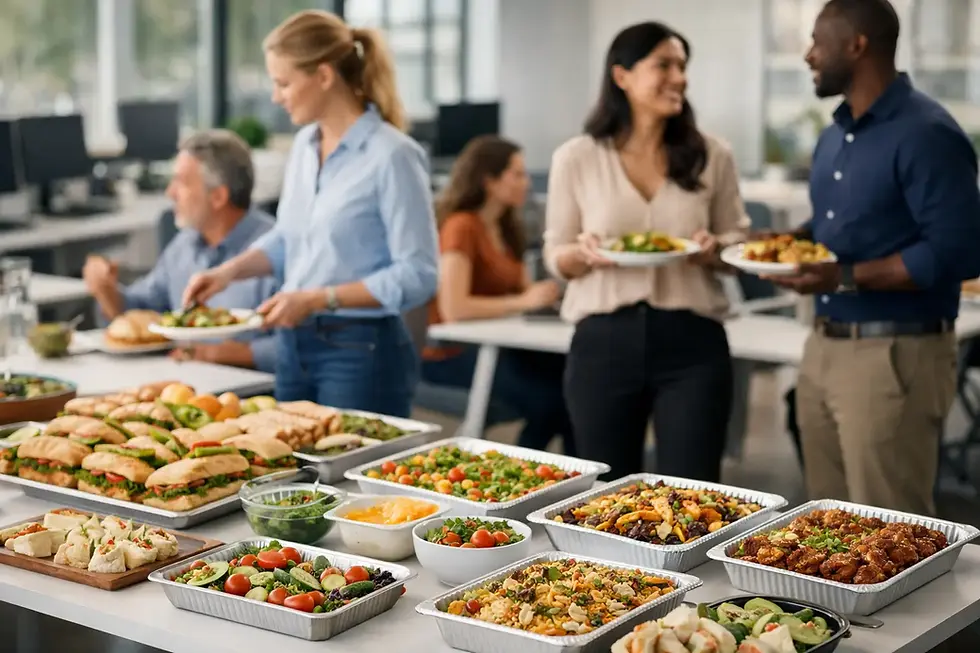
What about large orders and catering?
For larger orders, it depends on how standardized the menu is and how much coordination you need. If you’re feeding a group and the order is built from clear trays, packages, or family-style options, online ordering can be efficient. Everyone can review the cart, confirm quantities, and make sure nothing gets missed.
But if the order involves timing across an event, special setup requests, or help choosing portions, phone ordering has an edge. Talking to someone can prevent the classic large-order problem: ordering too little, too much, or the wrong mix.
This is especially true for school events, office lunches, game-day spreads, and parties where one mistake affects a lot of hungry people. In those cases, convenience matters, but confidence matters more.
The loyalty and deal advantage
Here’s where digital ordering often pulls ahead. Online platforms and mobile apps are built to encourage repeat orders. You see rewards. You notice promotions. You remember that there’s a discount once your cart hits a certain amount. That can change behavior fast.
For customers, it means a smoother way to save. For a local restaurant, it means more direct repeat business and fewer missed opportunities. It’s one reason so many regulars now order digitally even if they used to call every time.
At DiMaria’s, for example, digital ordering makes a lot of sense for customers who want easy reordering, online deals, and a straight path to favorites like New York-style pizza, Italian comfort food, or a specialty pie that deserves its own fan club. When the menu already has strong crowd-pleasers, the easier the ordering path, the more likely dinner gets settled fast.
So what should you choose tonight?
If your order is simple, visual, and driven by convenience, online ordering is usually the better play. You’ll see the full menu, catch any specials, and put the order in on your own time. It works especially well for weeknight takeout, delivery, and repeat favorites.
If your order needs discussion, reassurance, or extra coordination, phone ordering still earns its spot. It’s better for questions, more complex requests, and those moments when talking to a real person is the fastest way to avoid a problem.
The good news is you do not have to be loyal to one method. The best customers often switch depending on the situation. Use online ordering when you want speed, deals, and control. Pick up the phone when the order needs a human touch.
Dinner should feel easy before the first slice even hits the table. Choose the method that gets you there with less hassle and more confidence.


Comments